
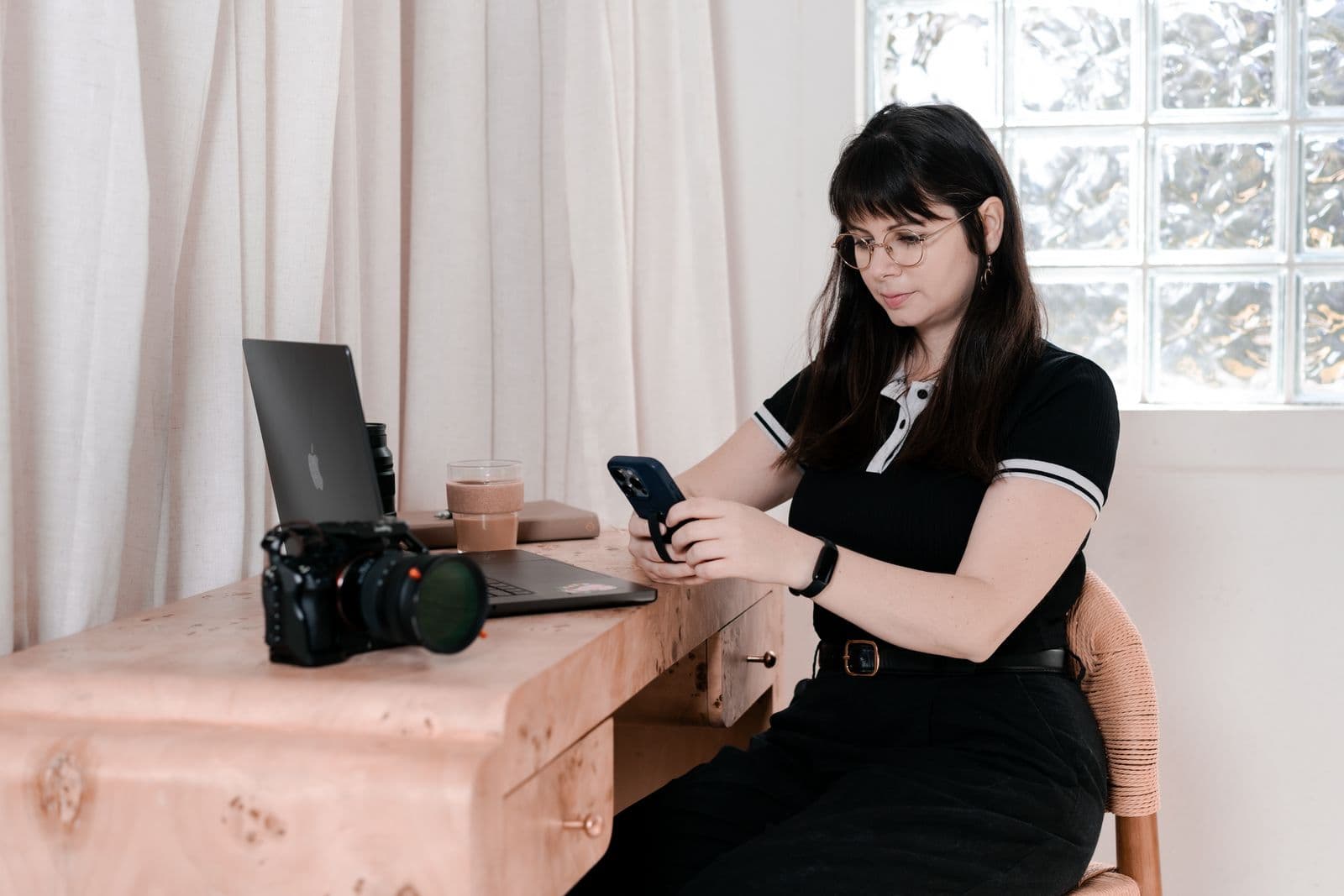
Where to Shoot Brand Photos: Studio, Your Office, or On Location
Most brand photoshoot locations are not chosen. They are defaulted into — the office because it is free, a park because the weather looked good, a studio because it felt professional. Then the gallery comes back and half of it does not fit where it was meant to go.
The location is not a mood decision. It decides what can physically be in the frame, which means it decides what the images can be used to prove. A studio cannot show your buyer that you have a real workshop. Your office cannot give you a background that still matches when you hire someone in two years.
Here is what each of the three settings actually produces, what it cannot produce, and how to choose before anyone writes a shot list.
Start From the Shot List, Not the Mood Board
Before comparing locations, write down what the session has to deliver. Not adjectives — destinations. A homepage hero. Six service page images. Headshots for four people. Something for the next three months of social. An image for a conference bio.
Now read that list back and ask what each item needs to have in the frame. That sorts itself into three piles fast:
- Images that need a clean, controlled, repeatable frame. Headshots, product shots, anything that has to match something shot later.
- Images that need evidence. You working, your team working, your space, your tools, your process.
- Images that need room and atmosphere. Wide frames with negative space for headline text, lifestyle moments, anything that has to feel like somewhere rather than nowhere.
Those three piles map almost exactly onto studio, your own workspace, and an outside location. If one pile holds most of your list, you have your answer already. If they are evenly split, you are running a two-location day, which is normal — multiple locations and outfit changes are standard in a full brand session.
The Studio: Control, Consistency, No Context
A studio is a room engineered to remove variables. The light is built rather than found, the background is whatever color you decide, and nothing walks through the frame.
What it produces well. Headshots that match across a whole team and keep matching when you add someone next year. Product and packaging shots against clean seamless backgrounds. Portraits where you want the person and nothing else. Images with large areas of flat, quiet background that a designer can drop text onto. Anything that needs to be shot again later and look identical — which is the entire argument for corporate headshots done to a documented setup.
What it cannot produce. Proof. A studio frame says nothing about whether you have a real practice, a real kitchen, a real shop floor, or a real team. For a buyer deciding whether to trust you with money, the absence of context is a cost, and it is why a gallery made entirely of studio portraits so often feels polished and persuades nobody.
The honest case for it. If your work is knowledge work that looks like a person at a laptop, the studio is frequently the stronger choice, because the alternative is photographing a laptop. The job then shifts to wardrobe, expression, and variety instead of environment.
Your Own Workspace: The Only Setting That Proves Anything
Your office, studio, clinic, kitchen, shop, or job site is the only location that can show the thing you are asking people to believe.
What it produces well. You at work in the actual place. Your team interacting rather than posing. Tools, materials, screens, and surfaces that belong to you. Wide environmental frames that give a sense of scale — the single most underused shot type on most service pages. Detail shots that carry a site for years because nothing in them dates.
What it costs. Your space has to survive a camera, and most spaces need an hour of preparation first. The usual problems:
- Mixed light. Daylight from a window plus warm LED or fluorescent overheads produces two different color temperatures in one frame. The fix is almost always to turn the overheads off and shoot toward the window, which is why window direction matters more than square footage.
- Not enough room behind the camera. A flattering portrait needs distance between the camera and the subject. A narrow office can force a wider lens than anyone wants.
- The background. Whatever is behind you is in the photo: cables, a cluttered shelf, a half-erased whiteboard, an exit sign.
- Other people and confidential material. Client files, screens, patient areas, and colleagues who did not agree to be photographed all have to be handled before the shoot, not during it.
- Permission. If you lease, a shared lobby, a co-working floor, or a building exterior may belong to a landlord with an opinion about commercial photography.
The fifteen-minute audit that solves most of it. Walk the space at the same hour you plan to shoot. Note which windows have usable light at that hour, find one uncluttered wall of roughly eight to ten feet, check how far back you can stand, locate the power outlets, and look at every background a camera would see. Send photos of the rooms to your photographer before the shoot. That one step reliably changes the plan for the better.
Outside Locations: Variety, Atmosphere, Less Control
The third option covers everything that is neither a studio nor your own four walls: a rented home studio or loft, a coffee shop, a gym, a client site, a hotel lobby, a rooftop, a park, a street.
What it produces well. Variety from a single day — two or three visibly different scenes in one session. Lifestyle frames that look like a life rather than a job. Wide architectural backdrops with the depth a homepage hero needs. Images that place your brand in a city, which is why we keep a running list of Houston locations that photograph well at specific hours.
What it costs. Control, mostly. Weather is the obvious one; the less obvious ones are time of day (the same park is beautiful at 7:30 a.m. and unusable at 1 p.m.), background traffic, noise if video is part of the day, nowhere to change outfits, no power for lights, and travel time out of the shooting window.
And permission. A business that lets you shoot during quiet hours is doing you a favor, and that favor should be arranged in advance and ideally in writing if the images are going into advertising. Public parks are not automatically free either — a shoot in a City of Houston park goes through the Parks and Recreation reservations office on its professional filming and photography request form, which covers still photography as well as video and carries a per-park, per-date reservation fee.
One thing that trips people up less often than they fear: photographing a building. Under 17 U.S.C. § 120(a), the copyright in a constructed architectural work does not include the right to stop pictures of that building being made or published if the building is located in or ordinarily visible from a public place. That is a narrow permission about the architect's copyright, and it does not give you the right to walk onto private property, ignore a venue's rules, use someone's trademark to imply endorsement, or photograph people without a release — which is the broader subject of our guide to brand photo usage rights.
Side by Side
| Studio | Your workspace | Outside location | |
|---|---|---|---|
| Light | Built, identical every time | Found, changes by hour | Found, changes by hour and weather |
| Best for | Headshots, product, matched sets | Proof, process, team, scale | Variety, lifestyle, wide heroes |
| Weakest at | Showing what you do | Looking consistent over years | Anything needing control |
| Prep required | Wardrobe and shot list | An hour of clearing plus an audit | Permission, scouting, a weather plan |
| Repeatable later | Yes, exactly | Yes, until the space changes | Rarely |
| Main risk | A polished gallery that proves nothing | A cluttered or badly lit room | Losing the window to weather or crowds |
The Four Questions That Decide It
- Where will the images run? A homepage hero needs a wide frame with a quiet area for a headline, which usually means an environment rather than a backdrop — our website photography guide breaks down what each page template requires. A team grid needs matched backgrounds, which usually means a studio or a repeatable corner of your own office.
- Does your work show? If the craft is visible — food, treatment, construction, making, training, repairing — shoot where it happens. If the work is a conversation or a screen, the environment adds less, and the studio stops being a compromise.
- How many distinct images does each setting owe you? If one location has to produce four images and another has to produce twenty, do not split the day evenly between them.
- Can the room take a camera? Run the audit above before committing. A beautiful office with north-facing windows and a clean wall beats a rented studio. A dim interior room with no window and a busy background does not, no matter how nice the furniture is.
Most Good Sessions Use Two
Two settings in a half day is comfortable. Three to four across a full day is achievable. The constraint is not the shooting — it is that every move costs packing, driving, parking, finding power, and rebuilding the light, which lands somewhere between 45 and 90 minutes in real conditions.
So the planning question is not "how many places can we get to." It is which setting carries the images that matter most, and what the second one adds that the first cannot. A common and effective pairing is the workspace for proof and process plus one outside location for the wide hero and the lifestyle set — then headshots against the cleanest wall in the building rather than a fourth stop.
If video is part of the same day, the location math changes again: sound becomes a hard constraint, and a cafe that photographs beautifully can be unusable for an interview. We cover how that affects the running order in photo and video production in one day.
The Order of Operations
- Write the destination list. Every place an image has to go.
- Sort it into the three piles — controlled, evidence, atmosphere — and see which one is heaviest.
- Audit your own space first, because if it works it is the cheapest and most useful location you have access to.
- Choose the second setting to fill the gap the first one leaves, and settle permissions and timing before the shot list is finalized.
That sequence is deliberately the reverse of how most shoots get planned. Deciding the location first and the shot list afterward is what produces a gallery full of images with nowhere to go. For everything that happens after the location is settled — wardrobe, props, timeline, and the week-of logistics — our guide to preparing for a brand photoshoot picks up from here, and brand photography ideas covers the shot concepts each setting can support.
Frequently Asked Questions
Where should I shoot my brand photos?
Start from the shot list rather than the mood board. A studio produces a clean, repeatable, distraction-free frame and nothing else — it is the right answer for headshots, product work, and anything that has to look identical across a team or a catalog. Your own workspace is the only setting that produces proof you actually do the work, which is what service pages and about pages need. An outside location buys variety and a lifestyle feel the other two cannot. Most sessions use two of the three in one day, and the question is which one carries the images that matter most.
Can I shoot brand photos in my own office?
Usually, and it is often the strongest choice — but the room has to survive a camera. The things that decide it are window light (one large window with the blinds open beats every ceiling fixture in the building), floor space behind the camera, one uncluttered wall of about eight to ten feet, and whether anything confidential is visible on screens, whiteboards, or files. Walk the space at the hour you plan to shoot, not at lunchtime, because the light is the variable that changes. Mixed lighting — daylight from a window plus fluorescent or LED overheads — is the most common fixable problem, and the usual fix is turning the overheads off.
Do I need a permit to shoot brand photos outside?
It depends on who owns the ground. Private property — a restaurant, gym, co-working space, lobby, or anyone's office — needs the owner's permission, and for commercial use it is worth having that in writing. City of Houston parks require a professional filming and photography reservation submitted to the Parks and Recreation reservations office, with a per-park, per-date fee, and that form covers still photography as well as video. A public sidewalk generally does not, though street closures and large crews are a separate conversation with the city. We handle these as part of production rather than leaving them to the client.
Is studio or on-location brand photography better?
Neither is better; they produce different things. A studio gives you control, consistency, and a background that never dates — and it cannot show a single thing about how your business actually operates. On location gives you evidence, context, and scale, and gives up control of light, noise, and background in exchange. If your buyer needs to see your space or your process before they trust you, location wins. If your images need to match each other across years of hiring, the studio wins.
How many locations can you shoot in one day?
Two comfortably in a half day, three to four in a full day, and the limit is almost never the camera. Every move costs packing, travel, parking, finding power, and rebuilding the light, which runs 45 to 90 minutes in real conditions. Multiple locations and outfit changes are standard in our sessions, but four locations in a half day means four rushed setups instead of two good ones. The arithmetic to run is how many distinct images each setting has to produce, not how many settings sound interesting.
If you are not sure whether your own space can carry the shoot, send photos of the rooms to a free strategy call and we will tell you honestly what it can and cannot produce — then build the location plan around the images you actually need. That planning is part of every brand photography session we run.