
Photo & Video Production
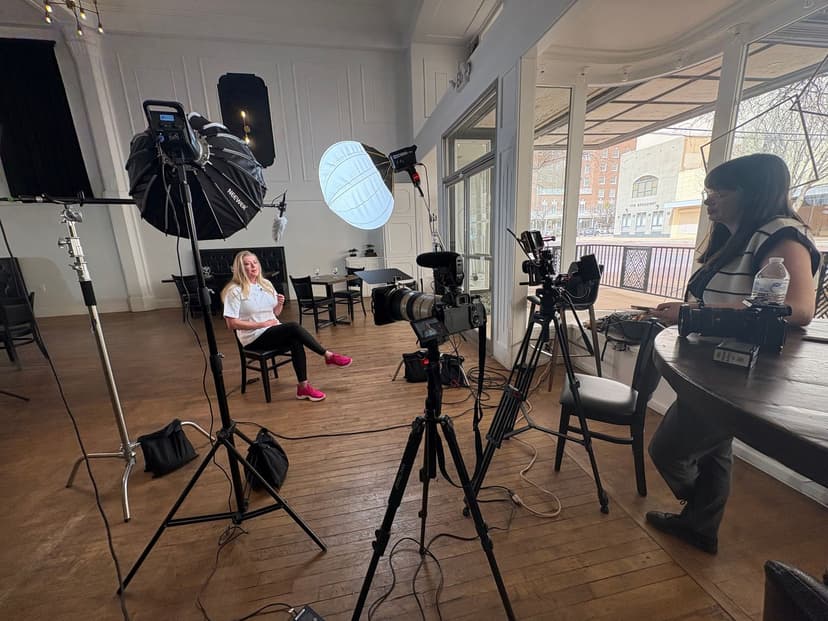
Most businesses need both and buy them separately — two vendors, two shoot days, two different looks that never quite sit right on the same page. Marmalade Media produces photography and video in house, which means one strategy session, one crew, one schedule, and a set of stills and footage that were lit and styled to live together. This page covers how a combined day actually runs, what it produces, and when splitting it into two days is the better call.
Why One Shoot Instead of Two
Look at almost any company's About page and you will find a portrait of the founder and, somewhere near it, a founder video. Shot months apart by different people, the haircut has changed, the shirt is different, the wall is a different shade of white, and the color grade is warmer in one than the other. Visitors do not articulate any of that. They just read the page as slightly less put together than the competitor whose assets match.
The efficiency argument is real too, but it is not about camera time. A photo shoot and a video shoot share most of their work: scouting the space, clearing it, setting up and tearing down, lighting a room, and getting a subject relaxed enough to look like themselves. Doing that once instead of twice is where the day actually pays for itself.
It is worth being blunt about the limit. A combined day is not two full days compressed into one. It produces a planned set of both, not the maximum of each, and the shot list has to be built with that in mind from the start.
What a Combined Day Produces
Every combined project is scoped to the deliverables you actually need, but these are the pieces a well-planned day usually covers.
A Planned Brand Photo Set
Founder, team, workspace, and detail images mapped to the placements they will fill — website sections, social, email, and ads — rather than a general gallery you have to go hunting through later.
A Primary Video Piece
The one video the project is really for: a brand story, a founder introduction, a client testimonial, or a service explainer, filmed with proper lighting and dedicated audio rather than squeezed in at the end.
Headshots in the Same Light
Portraits captured in the same session as the video, so the headshot on a bio page and the person on camera below it look like the same person photographed on the same day — because they were.
Vertical Cutdowns
Short 9:16 edits pulled from the same footage for Reels, Stories, and TikTok, captioned and framed so nothing important sits where the platform puts its own interface.
B-Roll That Matches the Stills
The team-at-work footage and the team-at-work photographs come from the same setup, the same light, and the same moment, which is why they cut together cleanly in an edit.
One Organized Delivery
Photos and video delivered together in a single gallery, named by placement, in web and print versions and in the aspect ratios each channel needs. One handoff to your designer or web developer, not two.
How We Plan One Day Around Both
Photography and video have genuinely different technical requirements. Running them in the same day is a scheduling and lighting problem, and it is solved in pre-production — not improvised on set.
Lighting is the decision that drives the day
Still photography can be lit with strobes that fire for a fraction of a second. Video needs light that stays on. A combined day is built on continuous lighting that flatters both, so the room does not have to be torn down and relit between blocks. Where one specific still genuinely needs flash — a high-contrast product shot, say — that gets its own block at the end of the day rather than interrupting the middle of it.
Audio sets the running order
Interview audio needs a quiet room. Photography is the noisy part of the day: direction, movement, people repositioning, the shutter itself. So the on-camera piece is filmed first, while the space is still quiet and the subject has the most energy, and the photography blocks follow it. Reversing that order is the single most common way a combined day goes wrong.
Continuity is a planning problem, not a post problem
If a portrait and a video clip are going to sit on the same page, they need the same outfit, the same hair, and the same light. No amount of editing fixes a wardrobe change between them. In pre-production we list which pairs have to match and lock wardrobe, location, and lighting to those blocks, then let the rest of the day vary deliberately so the library does not look monotonous.
Framing for two aspect ratios at once
A still can be composed tight. Video needs headroom for movement and a safe margin where captions and lower thirds will sit, plus survivable framing if the same take has to become a vertical cut. When a setup serves both, we compose for the video's constraints and crop the still from inside it — not the other way around, which is how you end up with footage that cannot be reframed.
The overlap blocks are where the day is won
Hands on the work, the walk through the space, a conversation between two team members — those are a single setup that yields B-roll and photographs at the same time. We push as much of the schedule into overlap blocks as the shot list allows and keep the specialized blocks, the sit-down interview and the headshot station, short and deliberately separate.
Stills are shot as stills
Pulling frame grabs out of video and calling them photographs is a shortcut that shows. A video frame is captured with a shutter, resolution, and depth of field chosen for motion, and it falls apart at print size or across a full-width web hero. Every delivered photograph comes off a stills camera in its own pass.
Combinations We Produce Most
Certain photo and video pairings fit a single day naturally because they share subjects, locations, and lighting.
Brand Library + Founder Story Video
The most common combination. A full brand photography set for the website and social, plus the founder story video that sits on the homepage and the About page, shot in the same space on the same afternoon.
Team Headshots + Culture Video
Consistent headshots for every person on the team, plus a culture or recruiting video cut from the footage captured around them. The careers page ends up with imagery that was made for it rather than borrowed from elsewhere.
Product Photography + Product Demo
Clean product stills for the catalog and the listings, plus a short demo showing the thing actually being used. Same set, same lighting, same styling — which is exactly what a product page needs.
Campaign Stills + Video Ads
Ad creative in both formats for a single campaign: still variants for the feed and display placements, video versions of the same concept for the platforms where motion performs better.
Event Photography + Highlight Reel
Coverage of the room, the speakers, and the attendees as photographs, plus a highlight edit for the recap email and next year's promotion. One team on site rather than two crews competing for the same angles.
Client Testimonials + Portraits
Filmed testimonials paired with a portrait of each person interviewed, so the written quote on your site and the video version of it carry the same face in the same light.
When to Split Them Into Two Days
Combining is not always the right answer, and we would rather say so before you book than halfway through a shoot day. Split the project when either side is a serious piece of work in its own right:
- A scripted video ad with talent direction. A storyboarded concept with multiple setups and performances needs the whole day pointed at it. Photography in the middle breaks the momentum that good on-camera work depends on.
- A large headshot day. Around thirty people or more, a headshot session becomes a timed assembly line with people cycling through in short slots. An interview setup parked in the middle of that stalls the queue and costs more time than it saves.
- Different campaigns on different timelines. If the photography supports a launch next month and the video is for a campaign next quarter, combining them only forces one of the two to be planned before anyone knows what it needs to say.
- Conflicting locations. When the photography calls for a controlled studio background and the video has to be filmed in the real workspace to be credible, the travel and setup between them eats the day that combining was supposed to save.
- Multi-location projects. Several sites in one day leaves very little shooting time at any of them once travel and setup are counted. These are usually better as a photography pass and a separate video pass, each planned around its own route.
Compressing two real projects into a single day to look efficient produces two mediocre deliverables. The strategy call is where we work out which this is.
Our Process
The same strategy-first process we use for every project, applied to a day that has to deliver on two fronts.
1. Strategy Call — One Plan for Both
We start with where the assets are going: which pages, which campaigns, which channels. That produces a single shot list covering photo and video together, a note on which pairs have to match, and an honest read on whether the whole thing fits in one day or wants two. You get a flat quote for the project before anything is scheduled.
2. Production — One Day, Blocked in Order
We arrive with lighting that serves both, run the on-camera piece first while the room is quiet, then move through the overlap blocks and the photography. You see the schedule in advance, so your team knows exactly when they are needed and for how long instead of waiting around all day.
3. Deliver — Photos and Video, Organized Together
Edited photographs land first, typically within 7 to 14 business days, in web and print versions organized by placement. The finished video follows, usually within two to three weeks of the shoot, in the aspect ratios each channel needs and captioned and ready to upload. One delivery, one naming convention, nothing for you to reconcile between two vendors.
Photo & Video Production in Houston & Nationwide
Marmalade Media is based in Houston, TX, and produces combined photo and video days at client offices, studios, storefronts, clinics, and job sites across the metro — downtown, the Galleria and Uptown, Montrose and the Heights, Memorial, the Energy Corridor, and Sugar Land. Scouting matters more for a combined day than for either discipline alone, because a room has to work for continuous lighting and for quiet audio at the same time. See everything we offer as your Houston brand photographer.
For clients in other cities, we travel, and trips are quoted with travel included. Browse the portfolio for the standard we hold every shoot to, read how we run a project end to end on our process page, or request a custom quote for your project.
Related Services
Brand Photography
The photography side on its own — founder, team, workspace, and lifestyle imagery built as an evergreen library for every channel.
Learn More →Video Production
The video side on its own — brand films, corporate video, ads, and social content, from concept and scripting through to the final cut.
Learn More →Marketing Photography
When the shoot exists to feed one campaign, every frame is planned backward from the placement it has to fill.
Learn More →Photo & Video Production FAQ
Yes, and for most brand projects it is the better way to do it. Marmalade Media produces both in house, so a combined day runs on one plan rather than two vendors coordinating by email. What makes it work is the running order: the interview or on-camera piece is filmed first while the room is quiet, then the day moves into photography blocks under the same lighting. What it is not is two full days compressed into one — a combined day produces a planned set of both, and we tell you in pre-production exactly which pieces fit in the hours booked.
That is the main reason to book them together. When a portrait and a founder video are shot months apart by different people, the wardrobe, the hair, the wall color, and the color grade all drift, and a visitor registers the mismatch even if they cannot name it. On a combined day we decide in pre-production which pairs have to match — the About page portrait and the About page video, the bio headshot and the bio clip — and lock wardrobe, location, and lighting to those blocks.
It is more efficient, which usually shows up in the quote. The savings do not come from camera time — they come from doing the scouting, setup, space prep, lighting, and subject warm-up once instead of twice. A combined project is quoted as a single project after a strategy call, based on the shoot length, the number of setups and locations, and the finished deliverables you need on each side.
No. Frame grabs are not photographs — a video frame is captured with a shutter, resolution, and depth of field chosen for motion, and it falls apart at print size or on a full-width web hero. Every delivered photo on a combined day is shot properly on a stills camera in its own pass. The overlap between the two is in the setups we share, not in the files we extract.
Most combined projects run a half day to a full day on location. A half day typically covers one on-camera piece plus a focused photo set — headshots and a workspace block, for example. A full day adds multiple interview subjects, more locations within the same building, or a wider photo library. The shot list determines the hours, not the other way around, and you see the schedule before the shoot.
When either side is a real project in its own right. A scripted video ad with talent direction and a storyboard deserves a dedicated day. So does a headshot day for roughly thirty people or more, which runs as an assembly line that an interview setup would stall. The same goes for photo and video serving different campaigns with different launch dates, or a project where the photography wants a controlled studio and the video has to be filmed in the real workspace. We will say so on the strategy call — compressing two real projects into one day to look efficient produces two mediocre deliverables.
A single delivery covering both sides: edited high-resolution photographs in web and print versions, organized by where they will be used, plus the finished video in the aspect ratios each placement needs, captioned and ready to upload. Photo galleries typically deliver within 7 to 14 business days of the shoot. Video typically follows within two to three weeks, since editing, color, audio, and captions all happen after the gallery is done.
Need Both? Book One Day.
Book a free strategy call and we'll plan the photography and the video against a single schedule — or tell you honestly if yours is a two-day project.