
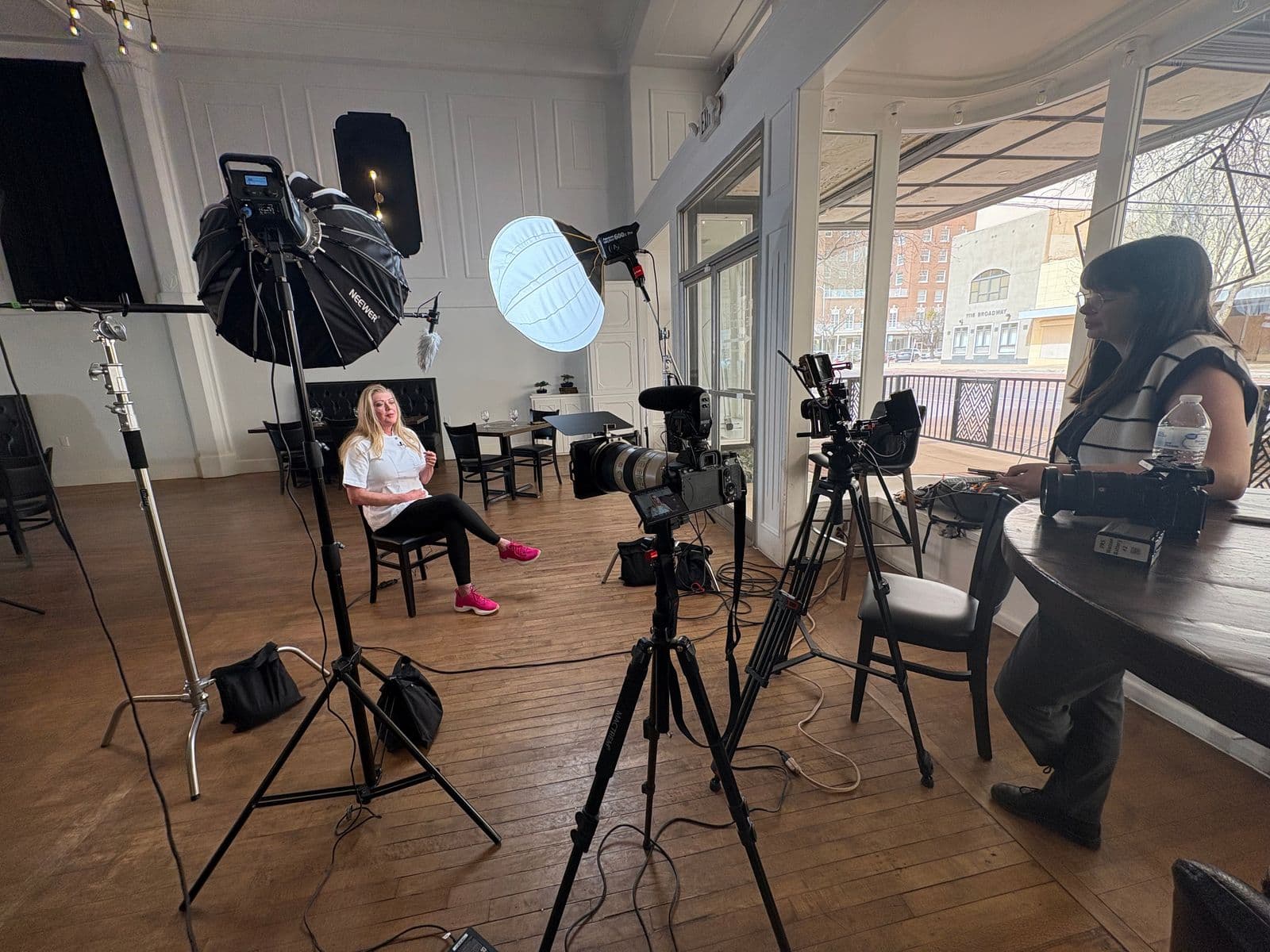
Who Should Go On Camera: Your Employees or Hired Talent?
Most businesses answer this question by accident. Someone asks around, one person says yes, and that person becomes the face of the company for the next two years. Or the opposite happens — nobody volunteers, somebody books a performer to fill the gap, and the finished video quietly stops being about the company at all.
Neither outcome came from a decision. And the decision is not really about who performs better, because on that question hired talent wins almost every time and it still does not settle anything.
The question is what the video claims.
Start From What the Video Claims
Nearly every business video makes one of three claims, and the claim decides the casting.
"This is us." Careers and culture videos, capability and process pieces, founder stories, anything shot in your actual space. The entire value of these is that they are real. A hired performer standing in your office does not read as a polished version of your team — it reads as a company that did not want to show you its team. Candidates are especially good at spotting it, because they are already looking for the gap between the pitch and the place.
"This is what a customer said." Testimonials and case study videos. This one is not a taste question, and it has a line in it that is not yours to move. More on that below.
"Here is how this works." Explainers, product demos, scripted narration, training on a general concept rather than your specific process. These claim nothing about identity. The person on screen is a presenter, not evidence. Casting is a craft decision and a hired performer is legitimately the better answer.
Write down which of the three you are making before you ask anybody to appear. Most of the hard cases dissolve at that point — it belongs in the project brief alongside everything else, which is covered in our guide to writing a creative brief.
When It Should Be Your Own People
The cases where internal people are not just preferable but structurally required:
- The subject of the video is the workplace, the team, or how the work actually gets done.
- Candidates are the audience. A careers video cast with performers is the most self-defeating version of this mistake, which is why recruiting video is built around opt-in employees rather than a set.
- The speaker needs specific authority — a technician explaining the machine they actually repair, a nurse walking through a procedure they actually perform. This is why training video is almost always shot with staff.
- Expertise is the product. In professional services, medicine, law, and coaching, the person is what is being bought.
- The viewer could plausibly meet that person. Nothing undermines a video faster than arriving at the office and finding none of those people work there.
The honest caveat: your people are not performers, and it shows immediately if you hand them a script. The fix is not coaching them into actors. It is changing the format — an interview rather than a piece to camera, topics shared in advance, answers that can be restarted as many times as needed, short takes, and enough B-roll that the edit is never trapped on one hesitant delivery. Done that way, the lack of polish becomes the point rather than the problem.
When Hired Talent Is the Right Call
There are five cases where booking a performer is the correct professional answer, not a compromise.
Narration over your own footage. A professional voice carrying the structure while your actual team appears on screen. This is the most under-used option on this list, and it is covered properly further down.
A scripted piece to camera with a long shelf life. An evergreen explainer meant to run for three years inside a company with normal turnover. Put an employee's face on it and the video dates the day they resign — not because anything in it became wrong, but because the person introducing your company no longer works there.
A depicted scenario rather than a real one. "A customer calls at two in the morning" is an illustration, and nobody is claiming the person on screen is a specific customer. Just label it honestly in the edit and resist dressing a performer to look like staff in a video that elsewhere shows real staff.
Nobody internal consents. This is a legitimate outcome, not a failure. A clearly staged video is better than a coerced one, and a team that was pressured on camera reads exactly as pressured.
The role is physically specific and you do not have it in-house. Hands for a close-up demo, or a stand-in for work that is genuinely unsafe to stage with the person who normally does it.
One thing to settle before you book anyone: what the usage actually covers, where the video is allowed to run, and for how long. Hired-talent usage is normally limited by media and by term and is negotiated per booking rather than once and forever. Ask about it during casting rather than eighteen months later when you want to turn the piece into a paid ad.
The Testimonial Line
This is the one place where the choice is not a preference.
A performer reading a scripted review is not a testimonial, and running it as though it were is a problem rather than a style decision. The FTC's Endorsement Guides also reach inside your own org chart: where an ad features "an endorser who is a relative or employee of the marketer, the ad is misleading unless the connection is made clear," and that disclosure has to be clear and conspicuous. Listing an employer somewhere in a profile does not count.
Here is the distinction most people miss, and it matters on nearly every corporate shoot: appearing is not endorsing. An employee doing their job on camera in a culture video is not endorsing anything and needs a release. The same employee saying "this is the best software I have ever used" is endorsing, and needs a release and a disclosure. Knowing which one a given soundbite is determines whether you can run it as-is.
Our position on testimonial video is simple and has not changed: real clients describing real experiences, never performers standing in for customers.
Asking an Employee Is Not a Neutral Request
There is a power dynamic in the ask that is easy to miss when you are the one making it. Treat it accordingly: ask in advance and in writing, never on the day in front of a lens, and where you can, make sure the person asking is not the person who writes their performance review. Saying no has to be genuinely free.
Two practical points that get skipped on most corporate shoots:
Time on camera is usually work time. For non-exempt employees, the Department of Labor's guidance on hours worked excludes attendance at lectures, meetings and training programs from compensable time only when all four conditions are met: "it is outside normal hours, it is voluntary, not job related, and no other work is concurrently performed." A video about an employee's own job fails the job-related condition on its face. Scheduling a Saturday shoot and framing it as a favor is the recurring version of this mistake. Confirm the details with your HR team or counsel, but plan the budget as though the hours count.
The release has to outlive the employment. A signed release should name every placement you actually intend, including paid ads, and remain valid after the person leaves. Our guide to brand photo usage rights covers how that sits alongside copyright in the footage itself.
Identify anyone who would rather not appear before the shoot day rather than during it. There is always a way to film a department without filming a face — hands, equipment, wide frames from behind, the space itself — which is why one person declining never blocks a video. What happens on a video shoot day covers how that gets handled in practice.
What Each One Costs You That Is Not Money
Your own people cost you: hours off the floor, more takes than you planned because nerves are real, turnover risk on anything with a long shelf life, the administrative work of consent, and the manager who volunteers themselves for a video that should have featured someone three levels down.
Hired talent costs you: a usage window with an expiry date on it, casting and fitting time before the shoot, a credibility gap the moment a viewer suspects the person is not staff, and one effect nobody warns you about — a trained performer and your actual team in the same video makes your team look worse by comparison than they would have looked alone.
The Hybrid That Usually Wins
Real people on screen, professional voice carrying the narration.
Your team doing the work, your technician's hands, your actual lobby, your real equipment — with a scripted voiceover providing the structure, the transitions, and the parts that have to be said precisely. You get the credibility that only real people produce and the clarity that only a professional read produces, and nobody internal has to memorize a word.
The common variation is employee interviews as the spine of the piece with hired narration for the connective tissue between them. For most corporate video projects this is the version that survives contact with reality, and it is usually cheaper than coaching a reluctant executive through fourteen takes of a script.
Three Questions That Settle It
- If a viewer learned the person on screen was hired, would they feel misled? If yes, it has to be your own people. This single question resolves most of the genuinely difficult cases.
- Does this video need the speaker to be specifically credible, or just clear? Credible means internal. Clear means either, and hired talent is usually better at clear.
- Will this still be running after that person is likely to have moved on? If yes, either accept the reshoot or cast it in a way that does not depend on any one person staying.
Answer those three and the casting is decided. Everything after it — scheduling, releases, coaching, wardrobe — is logistics, and logistics are our problem rather than yours.
Frequently Asked Questions
Should we use employees or actors in our company video?
Start from what the video claims rather than from who performs better. If the video says this is our team, our workplace, or how we do the work, its entire value is that it is real, and a hired performer does not read as a better version of your team — it reads as a company that did not want to show you its team. If the video only explains how something works, the person on screen is a presenter rather than evidence, and casting becomes a craft decision where hired talent is genuinely on the table.
Can we use actors in a testimonial video?
Not as the customer. A performer reading a scripted review is not a testimonial, and presenting it as one is a problem rather than a style choice. The FTC Endorsement Guides also treat an endorsement from someone connected to the advertiser as misleading unless that connection is made clear — so an employee praising your product is an endorsement with a material connection that has to be disclosed clearly and conspicuously. Appearing in a video is not the same as endorsing: an employee doing their job on camera in a culture piece is not endorsing anything.
Do employees need to sign a release to appear in a company video?
Yes, and the release needs to outlive the employment. A person has rights in their own name and likeness under state law, separate from anything to do with copyright in the footage. Get a signed release that names every placement you actually intend — including paid ads — and that stays valid after the person leaves. Without that, one resignation can quietly pull your best footage out of circulation.
What if an employee does not want to be filmed?
That is a complete answer and it should cost them nothing. Ask in advance and in writing rather than on the day in front of a lens, and try to make sure the person asking is not the person who writes their review. There is always a way to film a department without filming a face — hands, equipment, wide shots from behind, the space itself — so one person declining never blocks the video.
Do we have to pay employees for time spent filming?
For non-exempt employees, generally yes. The Department of Labor's guidance on hours worked excludes attendance at lectures, meetings and training programs from working time only when all four conditions are met: it is outside normal hours, voluntary, not job related, and no other work is performed at the same time. A video about someone's own job fails the job-related condition on its face, so a Saturday shoot treated as a favor is the common mistake. Confirm the specifics with your HR team or counsel.
Still not sure who should be in front of the lens? Book a free strategy call — tell us what the video has to claim and we will tell you honestly whether that is your team, hired talent, or the hybrid, before anyone has to be asked. See how we approach video production generally.