
What Happens on a Video Shoot Day: A Walk Through the Hours
The day is booked. A crew is coming to your office on Tuesday, you are on camera at some point, and nobody has told you what the hours in between actually consist of.
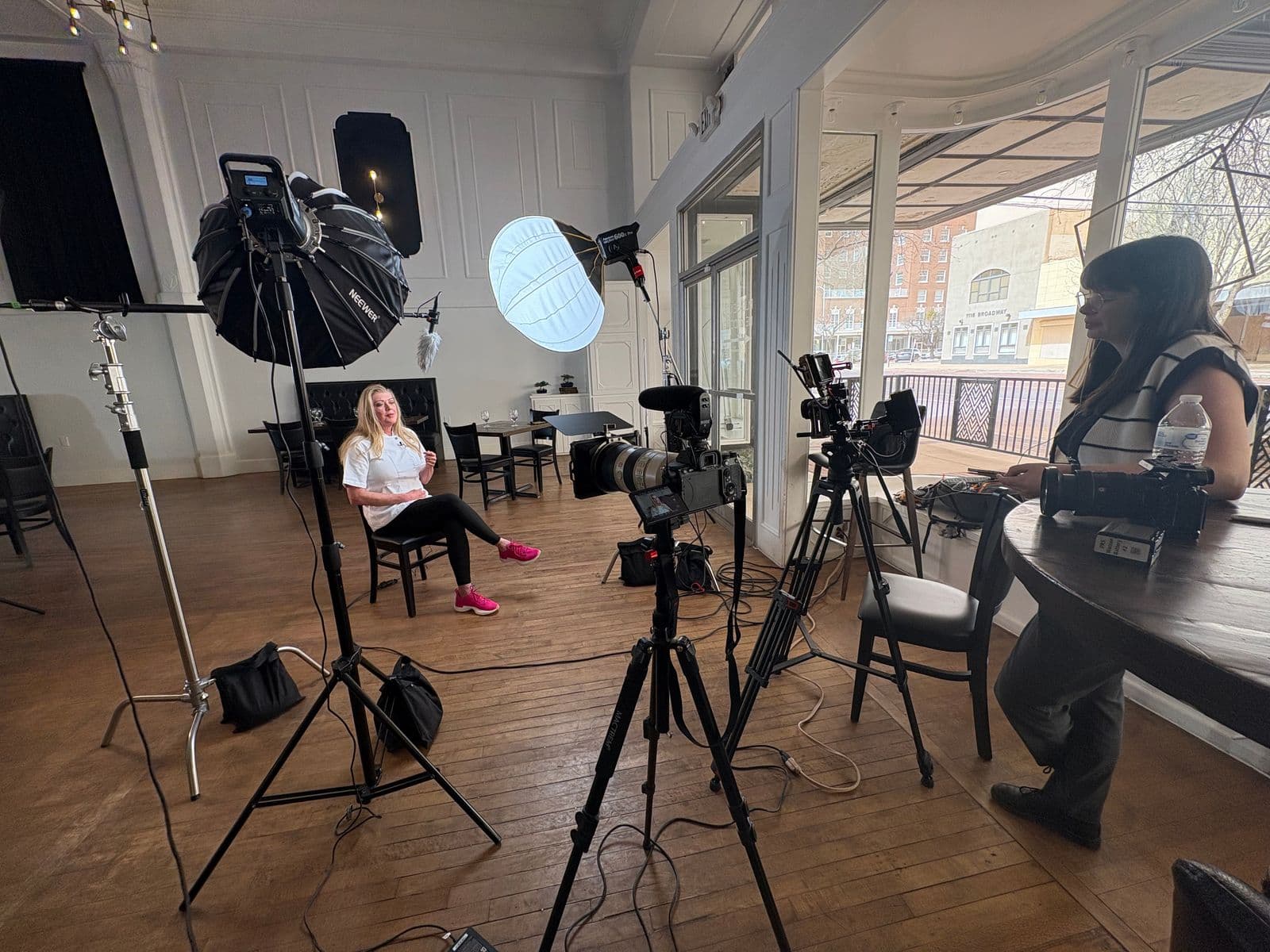
Most first-time clients picture something closer to a film set than what shows up. The reality is a small crew, a lot of cable, two or three rooms borrowed for the day, and long stretches where the camera is not rolling — which is normal, not a sign that anything is behind. Knowing the shape of the day in advance is the difference between spending it anxious and getting your own work done between blocks.
Here is what a video production day actually looks like, in the order it happens.
Before Anyone Arrives
The shoot day is the output of decisions that were made weeks earlier. The script is approved, the shot list exists, the locations are confirmed, and the people on camera know which hour they are needed. Changes are cheap while they are still on paper and expensive once a crew is standing in your lobby, which is why nothing gets filmed until the plan reads the way you want the finished video to read. That sequencing is the whole point of our process.
What you should have in hand before the day: an order of setups with rough times, a list of who is needed when, and a note of what each person is wearing.
What we need from you: one point person. Someone who can unlock a door, get the espresso machine switched off for twenty minutes, and tell a department their conference room is in use — without scheduling a meeting about it. A day with no designated point person loses more time than any technical problem.
Load-In and Setup
The crew arrives before the call time and spends the first stretch carrying cases. Parking and the nearest usable door matter far more than clients expect, so both are worth confirming in advance.
Then the room changes. Furniture gets moved, a plant gets relocated, blinds get adjusted or closed entirely so the light does not shift halfway through a take. Everything goes back where it was at the end of the day — a reference photo of the room before anything moves is standard practice.
The first setup is the longest, generally the better part of an hour, because every later setup reuses the decisions made in it. Lights are placed and shaped, the camera is positioned, and the background is composed rather than accepted.
Most of that time is spent on two things that never appear on screen:
Light that stays on. Video needs continuous light, not a flash that fires for a fraction of a second, so the room is genuinely lit for the duration of the block.
Silence that is not actually silent. HVAC, a refrigerator in the next room, overhead paging, elevator chimes, a landscaping crew outside, a printer on a timer. Your ear filters all of it. A microphone eighteen inches from someone's mouth does not. Expect to be asked to switch things off, and expect at least one surprise — the building's air handler is the usual culprit.
The On-Camera Block Comes First
Whatever else the day holds, the interview or presenter piece is filmed early. Two reasons: the space is still quiet, and the person on camera has the most energy they will have all day. Reversing that order is the most common way a day goes sideways.
The block itself follows a routine. A lavalier microphone gets clipped on and the cable routed under a shirt or jacket, which takes a minute and is less awkward than it sounds. Your eyeline is set — just off the lens for an interview, directly into it for a scripted address. Then there are a few warm-up questions that will never make the final cut, because almost nobody's first answer is their best one.
For scripted material, takes are short. Nobody holds more than a sentence or two, and a teleprompter is there when it helps. For interview material, including customer and client testimonials, there is no script at all; it runs as a conversation and the questions are edited out afterward.
Near the end of the block, everyone is asked to stay completely still and quiet for about thirty seconds while nothing is filmed. That is room tone — a recording of the space itself, used in the edit to patch gaps so a cut does not land as a sudden drop into digital silence. It is the strangest-feeling minute of the day and it is on every professional shoot.
What You Are Actually Asked to Do
Four directions come up on every shoot, and none of them are criticism.
Answer in complete sentences. "About three years" is unusable on its own. "We have been doing this for about three years" stands by itself once the question is gone.
Pause before and after. A beat of silence on either side of an answer gives the editor clean places to cut. Talking over the end of the question removes that option permanently.
Say it again, shorter. The second and third version of an answer are usually the tighter ones. This is the normal shape of a good interview, not a sign that the first one was bad.
Hold the look. You will be asked to stay in frame for a second or two after you finish speaking, because an edit needs somewhere to land.
Between blocks: water, a shine check, a lint roll. If you are going to be on camera in more than one scene, your outfit, hair, and jewelry stay as they are until those scenes are finished.
The B-Roll Blocks
B-roll is everything that is not a person talking to the camera — the work happening, hands on a product, a walk through the space, two people in conversation, a screen being used. It is what the edit cuts to while the voice continues, and it is usually the largest share of the day.
It also moves fastest, because it is filmed in short pieces and often repeated. Doing the same thirty seconds of ordinary work four times from four angles is the normal texture of a B-roll block. The crew is building coverage, not hoping for a lucky take.
Two things are worth sorting out in advance. Screens that will be in frame need to show something you are comfortable publishing — no client names, no patient information, no inbox. And anyone who does not want to be on camera should be identified before the day rather than in front of one. There is always a way to film a department without filming a face: hands, equipment, wide shots from behind, the space itself. On-camera appearance is handled with a signed release, which sits alongside the rest of the usage rights that come with your finished work.
Locations, Permits, and the Drone Question
Filming inside space your business controls is straightforward. Give your landlord or building management notice if the lobby, elevators, or garage are involved, since those usually belong to the building rather than to your lease.
Public property is a separate process. The Houston Film Commission asks productions to submit a registration form before filming within city limits and to carry a liability insurance certificate in the amount of one million dollars per incident, and a shoot that involves managing traffic or pedestrians, or closing a lane or street, requires hiring City of Houston police officers. None of that is difficult, but none of it happens the morning of.
Aerial footage is the same kind of item. Flying a drone for a commercial production requires a remote pilot certificate under FAA Part 107, and operating in controlled airspace requires FAA authorization obtained in advance. If your building sits in controlled airspace, which is common around Houston's airports, the drone block is a scheduling decision made in pre-production rather than an idea someone has at 3 p.m.
How the Day Ends
The last block is a review, not a shot. The shot list gets read line by line against what was filmed, because the cheapest possible fix for a missing shot is noticing it while the lights are still up.
Then the gear is struck, the room goes back the way it was, and the footage is copied off the cards to two separate drives before anyone leaves. Card to drive to backup, verified on site — a shoot day only exists once.
After that it goes quiet for a while. Editing, color, sound, graphics, and captions all happen off-site, you review the cut before anything is published, and final video typically follows within two to three weeks of the shoot.
What You Will Not Get at Wrap
Raw footage, and not out of stinginess. Material straight off the camera is ungraded and unmixed: flat and gray by design, audio recorded separately and not yet synced, no music, no trims. It looks materially worse than the finished piece to anyone who does not spend their week looking at it, which is why handing a drive over at 6 p.m. tends to do more damage to a client's confidence than anything that actually went wrong during the day. The monitor beside the camera is the honest preview, and the first cut is the first thing worth judging.
How to Make the Day Run Well
- Block the calendars of on-camera people wider than their slot — shoots move, meetings do not
- Name one point person with keys, authority, and no other obligations that day
- Tell the building and your own team that filming is happening, so nobody is surprised by lights in the lobby
- Decide in advance who is not appearing on camera
- Two wardrobe options per person, same shoes, no last-minute haircuts
- Clear the rooms being filmed the day before, including whiteboards and screens
- Do not book a client meeting in the space you are filming in
- Feed people, and take the break — the afternoon's footage depends on it
If you are also getting stills that day, the planning gets tighter rather than longer, and how a combined photo and video day is built covers how the two fit together. The photography equivalent of this guide, written from the client's side, is our brand photoshoot preparation checklist.
A good shoot day is boring in the right way. The interesting decisions were all made before it started, and what is left is execution — which is exactly what you want from the one day that cannot be redone.
Frequently Asked Questions
How long does a video shoot day take?
Most business video projects are a half day to a full day on site. A single presenter piece with a tight script often finishes in a half day. A project with several people on camera, more than one room, and a real B-roll list takes the full day. The length is set by the number of setups — each new camera position has to be lit, miked, and framed — not by the number of minutes of finished video, which is why a two-minute film and a thirty-second cutdown can take exactly the same amount of time to shoot.
Do I need to memorize a script before a video shoot?
No. Scripted pieces are filmed in short takes, with a teleprompter when it helps, so nobody has to hold more than a sentence or two at a time. Interview and testimonial pieces are not scripted at all — they are run as a conversation, and the questions are not in the finished edit. Because everything is cut afterward, a restart costs nothing. Stumbling and starting the sentence again is normal on every shoot we run.
What should I wear on camera?
Solid colors in your brand's range, nothing with a tight repeating pattern (fine checks and narrow stripes can shimmer on video), and no large logos unless they are yours. Bring a backup top in case of a spill. The one rule that matters more on video than on a photo shoot is continuity: anything filmed in the same scene has to stay in the same outfit, hair, and jewelry, because no edit can fix a wardrobe change in the middle of a sentence.
Do we need a permit to film at our own office?
Filming inside space your business controls does not require a city permit, though your landlord or building management may want notice, and shared lobbies, elevators, and garages usually belong to the building rather than to you. Public property is different. The Houston Film Commission asks productions to submit a registration form before filming within city limits and to have a liability insurance certificate on file, and any shoot that involves controlling traffic or pedestrians, or closing a lane or street, requires hiring City of Houston police officers.
Can we watch the footage at the end of the shoot?
You can watch it all day — there is a monitor next to the camera and you are welcome at it between takes. What does not happen at wrap is a handoff of files. Footage comes off the camera flat and unmixed, with no color grade, no sound balance, and no sync, and it looks notably worse than the finished piece to anyone who has not spent years looking at it. The first thing worth seeing is the first cut.
What happens if the day runs long?
The shot list is ordered by priority before the day starts, so the pieces that have to exist are filmed first and the nice-to-have shots sit at the end where they can be dropped without hurting the main deliverable. If something runs over — a location opens late, a key person gets pulled into a meeting — the recovery is to cut from the bottom of that list rather than to rush the on-camera block, which is the part that cannot be fixed later.
Permit, insurance, and airspace requirements change and vary by jurisdiction. The Houston and FAA requirements above are summarized from the official sources linked in each section — confirm current requirements for your location before your shoot date.
Planning your first video and want to know exactly how the day will run before you commit? Book a free strategy call — we will walk you through the schedule, the shot list, and what your team is actually asked to do. If you are still choosing a partner, start with how to choose a video production company.