
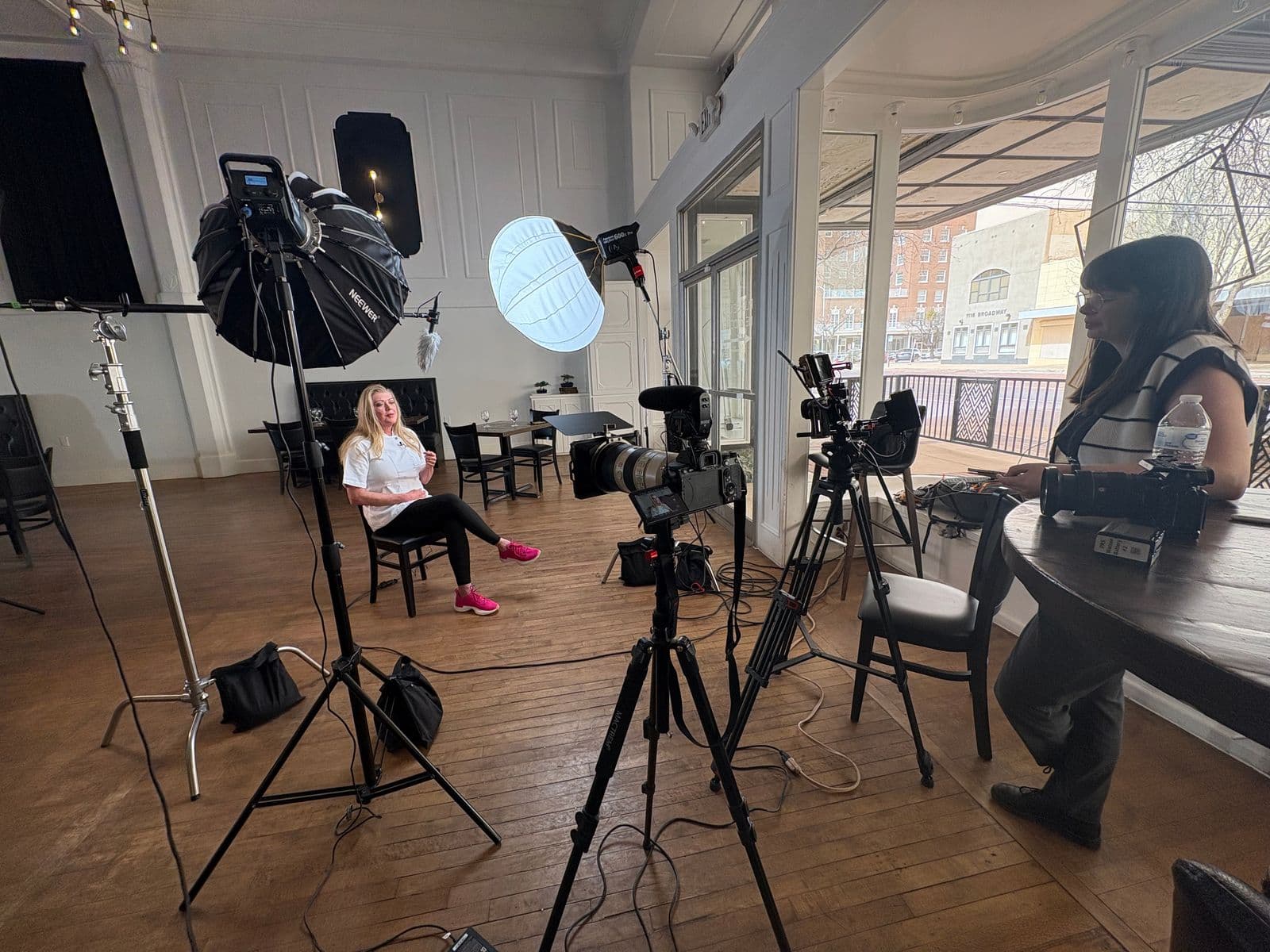
Event Photography vs Event Videography: Which One Does Your Event Need?
The question usually shows up as a line item. You asked for event coverage, the proposal came back with photography and video quoted separately, and now someone has to decide whether the second number is a necessity or a nice-to-have.
It gets read as a tier — photos as the standard package, video as the upgrade. That framing leads people wrong, because the two are not more and less of the same coverage. They capture different things, they need different positions in your room, and on the day they genuinely compete for the same floor space at the same moments. Deciding between them is easier once you know what each one is actually for.
The Short Answer
Photography gives you a large library of individual images you will pull from one at a time for a year. Video gives you a small number of finished pieces that reconstruct the experience — including the audio, which is the one thing photography can never deliver.
If the value of your event lives in what was said, video is the only medium that keeps it. If the value lives in who was there and what the room looked like, and you need to fill a website, a sponsor report, a press request, and a social calendar, photography covers far more placements per dollar.
What Photography Actually Solves at an Event
The defining property of an event gallery is volume plus retrievability. A few hours of coverage produces hundreds of usable frames, and their value is that any one of them can be pulled out months later for a purpose nobody anticipated on the day.
That is a longer list of jobs than most people count before the event:
- The recap — the email and the post that go out while people still remember being there.
- Next year's registration page, which needs wide room shots that make the event look full and worth the flight.
- Sponsor and partner reporting, where the ask is proof of placement: their logo, their banner, their step-and-repeat, actually visible in frame.
- Press and speaker outreach — clean, well-lit shots of your speakers that they will share on their own channels, which is free reach you only get if the frames are good enough.
- Recruiting and the About page, which need candid human moments of your team rather than a stage.
- Headshots, if you put a station in a side room. Your whole company is already in one building wearing good clothes, which is the hardest part of scheduling corporate headshots any other week of the year.
That last point is the one most teams miss. Event photography is often the cheapest way a business ever acquires a full image library, because the logistics it normally pays for — getting everyone in one place, dressed, on the same day — are already handled by the event itself.
Photography is also the faster deliverable, and it is the one that survives a bad room. A dim ballroom is a solvable lighting problem for stills. It is a harder problem for video, where the fix has to stay on for an hour.
What Video Actually Solves at an Event
Video has one capability photography structurally cannot match: it records what happened over time, with sound.
That matters in specific, identifiable cases:
- The content was verbal. A keynote, a panel, a training session, a product announcement, an investor update — the substance was spoken, and a photo of someone speaking preserves none of it.
- You sell the next one. Selling an event to someone who has never attended is a job for motion. Energy, scale, a full room, applause, and a crowd reacting are nearly impossible to convey in a still frame, which is why a highlight reel outperforms a gallery on a registration page.
- You have a replay product. On-demand libraries, member portals, paid session access, and post-event courses are all video deliverables by definition.
- You want testimonials. The best moment to capture a client saying something genuinely enthusiastic is while they are still in the building and still enthusiastic. Catching that later, over a scheduled call, rarely sounds the same.
Event videography is also where the deliverable count expands. The same filming day can produce a highlight reel, full session recordings, vertical social cutdowns, a sizzle piece, and sponsor-specific cuts — but only if those were decided during planning, because each one changes how the day is filmed. That is the practical reason event video costs more than event photography at the same hours: the day is a smaller part of the work than the edit is.
Two obligations come attached to the video side that do not attach to a photo gallery, and both are worth knowing before you publish:
Captions. Once a session recording goes on your website, it is synchronized media under the accessibility standard most organizations are measured against. WCAG 2.1 Success Criterion 1.2.2 requires captions for all prerecorded audio in synchronized media, at Level A — the baseline tier, not an advanced one. Our guide to video captions and accessibility covers what that means in practice and why auto-captions usually are not enough.
Disclosure on testimonials. If an on-site interview clip is going to run as marketing, the FTC's Endorsement Guides apply, including the rule that a material connection between the speaker and the advertiser has to be disclosed clearly and conspicuously. That is easy to handle at the point of capture and awkward to retrofit months later. The same goes for releases — see brand photo usage rights for how we handle permissions across both media.
Side by Side
| Event Photography | Event Videography | |
|---|---|---|
| What it captures | Moments, people, the look of the room | Time, motion, and sound |
| Output shape | Hundreds of individual images | A handful of finished pieces |
| Best at | Breadth, retrievability, proof of placement | Reconstructing the experience; keeping what was said |
| Audio | None | The entire point of half the deliverables |
| Low-light rooms | A solvable exposure problem | A harder, continuous-lighting problem |
| Crew on the day | One photographer; two if sessions overlap | Camera operator plus audio, scaling with concurrent sessions |
| Where the work sits | Mostly on the day | Mostly in the edit |
| Our delivery window | 7 to 10 business days, rush highlights sooner | Two to three weeks, teaser cut sooner |
| Feeds best | Website, email, press, sponsors, social, recruiting | Registration pages, ads, replays, sales follow-up |
Why One Person Usually Cannot Do Both
This is the part that gets glossed over in proposals, and it is the most practical thing on this page. The two jobs physically conflict.
They want opposite movement. Video wants a camera that stays put, stays running, and holds a steady frame. Photography wants an operator who keeps circling for new angles. One person cannot be locked off on the stage and roaming the room at the same time, and a locked-off camera left alone while its operator shoots stills is how you end up with ninety unusable minutes of a podium.
Shutters land in audio. A still camera firing a few feet from a lavalier or a shotgun mic is audible in the recording. On a stage where the audio feed is the deliverable, that is not a cosmetic issue.
Light works differently. Photographers frequently add light, and flash is the normal tool. Video needs light that stays on. Mixing them without planning gives you a video track that pulses every time the photographer fires.
They compete for the same floor at the same second. The ribbon cut, the award handoff, the check presentation, the keynote's closing line — there is one good position for each of those, and both disciplines want it. When one person is covering both, the conflict gets resolved silently, in the moment, and you find out afterward which job lost.
None of this means two cameras in one pair of hands is never appropriate. For a short, simple, well-lit event with modest expectations, it can be a reasonable economy. It should just be a decision you made rather than one you discovered. If your proposal shows one operator delivering both, ask directly which coverage gets dropped during the moments where they overlap. It is a fair question and the answer tells you a lot.
The same scope confusion shows up in the words themselves, which is why video production vs videography is worth reading before you compare quotes — two proposals for "event video" are often quoting different work entirely.
If You Can Only Fund One
A direct decision rule, in the order we would apply it:
- Is the substance of this event spoken? If a keynote, panel, training, or announcement is the reason people came, book video. Photos of that event document that it happened and preserve none of what happened.
- Do you need to sell the next one to strangers? If registration growth depends on people who have never attended, book video. A highlight reel is the asset that does that work.
- Otherwise, book photography. For most conferences, launches, galas, and openings, photography fills more placements, delivers faster, carries less risk in a difficult room, and gives you a library you will still be pulling from next year.
- If it is close, consider the half-step. A photographer for the full event plus a short, focused video block — testimonials in a reserved corner, or coverage of one keynote — is usually a better buy than thin coverage of both across the whole day.
What Booking Both Actually Looks Like
When both are in scope, they are not two vendors working in parallel. They are one plan with two sets of positions.
Shared: the run-of-show walkthrough, the venue scout, the list of moments that genuinely matter, and the deliverables conversation that drives everything else.
Separate: floor positions for every key moment, agreed in advance so the photographer is not crossing a locked video frame during the award. Lighting, decided jointly — continuous light the stills can work with is almost always the better compromise. Audio, which is the video crew's call and which the photographer works around. And the interview corner, which needs to be reserved, lit, and staffed with someone assigned to walk guests to it, or it quietly does not happen.
Booking both with one team is mostly a coordination advantage rather than a creative one. Two vendors who have never met will sort it out on the day, in your room, during your event. A single crew sorts it out in pre-production, which is the cheapest place to resolve anything.
One more planning note: if any of your video features employees as speakers rather than as people doing their jobs, decide that during planning, not at the event. Who goes on camera covers why that choice is about what the video claims rather than who performs best.
The Mistakes Worth Avoiding
Booking video with no deliverable decided. "Film the event" produces a drive nobody can use. Name the pieces first — highlight reel, session recordings, cutdowns — because that choice determines how the day is shot.
Assuming frame grabs will cover the photos. Video is shot at a shutter speed that makes motion look natural, which means moving subjects are softly blurred in any individual frame. Frame grabs fill gaps. They do not fill a gallery.
Forgetting sponsors have specific asks. Proof-of-placement images and branded cuts are both plannable and both easy to miss. Get the sponsor list into pre-production.
Planning the recap around one delivery window. Photos and video land weeks apart. Build the sequence around both clocks rather than holding everything until the edit is finished.
Frequently Asked Questions
What is the difference between event photography and event videography?
Photography produces a large library of individual, retrievable images — hundreds of frames that get pulled one at a time for a recap email, a sponsor report, a press request, a team page, or next year's registration site. Videography produces a small number of finished pieces that reconstruct the experience with motion and sound, including what your speakers actually said. One gives you breadth and retrievability. The other gives you the room as it felt, and the audio.
Can one person shoot both photo and video at my event?
Not well, and not at the same time. The two jobs conflict physically. Video needs a camera that stays running and holds a frame; photography needs an operator who keeps moving and repositioning. A still camera firing near a microphone lands in the audio track. Photographers often add light; video needs that light to be continuous rather than a flash. During the moments that matter most — the award, the ribbon cut, the keynote close — both disciplines want the same floor position. A single operator with two cameras will miss one of the two jobs, and it is usually not announced in advance which one.
Do we need both a photographer and a videographer?
Most business events want both, but not every event needs both on the first booking. If the value of your event is in what was said — a keynote, a panel, a training session, an announcement — video is the only medium that keeps it. If the value is in who was there and what it looked like, and you need to feed a website, a sponsor report, press, and a social calendar, photography covers far more placements per dollar. When budget only stretches to one, pick by which of those two statements describes your event, not by which medium is more impressive.
Which is more expensive, event photography or event videography?
Event video is almost always the larger line item at the same hours of coverage, and the difference is mostly post-production. A photo gallery is culled, color-corrected, and delivered. A finished video is edited, graded, audio-mixed, titled, scored with licensed music, cut to multiple platform ratios, and usually revised. More crew is involved on the day too, because concurrent sessions need concurrent cameras. We quote both as flat rates after a strategy call rather than by the hour.
How soon do we get event photos versus event video?
They run on different clocks, which matters if your recap is already scheduled. Our full photo galleries deliver within 7 to 10 business days, with rush-edited highlight images available sooner when you need to post while the event is still news. Most event video edits deliver within two to three weeks, with a short teaser cut scheduled ahead of the main edit for the same reason. Plan the recap sequence around both windows instead of waiting for everything to land at once.
Can the videographer just pull still images out of the video footage?
You can pull a frame, and it is a reasonable way to get one or two extra images. It is not a substitute for a photographer. Video is shot at a shutter speed chosen to make motion look natural, which means moving subjects are softly blurred in any single frame — exactly the frames you would want from an award handoff or a crowd reaction. Resolution, aspect ratio, and the ability to shoot a wide room and a tight portrait seconds apart all work against it too. Frame grabs fill gaps. They do not fill a gallery.
Have a date on the calendar and no decision yet? Book a free strategy call — bring your run-of-show and the list of places the content has to go afterward, and we will tell you honestly whether that is event photography, event videography, or both planned as one day.