
What Is B-Roll, and Why Your Video Needs More of It Than You Think
Open any video proposal and the phrase is in there: interviews plus b-roll. Almost nobody explains what the second half means, and most clients nod past it because asking feels like admitting they should already know.
It is worth asking, because b-roll is usually the larger half of the shoot day and almost always the part that decides whether the finished video works.
The Short Answer
B-roll is every shot that is not the primary footage of someone speaking. The work happening. Hands on a product. A walk through the space. Two people talking at a desk. A close shot of a tool, a screen, a detail.
The primary footage — the interview, the presenter, the person delivering the message — is the A-roll. The names are inherited from film editing, where the main footage and the supplementary footage physically lived on two separate reels that got cut together. The reels are long gone; the distinction survives because it still describes two genuinely different kinds of shooting.
The thing worth internalizing is that in the finished video, b-roll is not decoration laid over the real content. It is what the picture does for most of the running time while the voice continues underneath.
The Four Jobs It Does
It hides the cuts. This is the unglamorous one and the most important. A twenty-minute recorded interview trimmed into a ninety-second video contains dozens of edits — ums removed, a sentence from minute fourteen moved next to a sentence from minute two. Every one of those edits is a visible jump if the camera stays on the speaker's face. Cutting away to something else makes the join invisible. Without enough to cut away to, an editor is choosing between leaving the rambling version in or shipping a video that twitches.
It shows the claim. "We machine to tolerances most shops will not quote" is a sentence. Twelve seconds of the machining is evidence. Video is the one format where you can do both at once, and a video that only does the first half is a podcast with a face on it.
It controls pace. A static talking head held for ninety seconds feels roughly twice as long as the same audio laid over changing pictures. Nothing about the information changes; the perceived length does.
It gives the editor room to reframe. Delivering the same video as a wide 16:9 and a vertical 9:16 means every shot has to survive a crop. A close shot of hands or a product can be recomposed almost freely. A framed interview cannot, which is why aspect ratios and deliverable formats have to be decided before the shoot rather than in the edit — and why a deep b-roll library is what makes multiple cuts affordable.
Why Running Short Is the Most Common Way an Edit Fails
Clients tend to budget the day around the interview, because that is the part that feels like the content. Then the edit arrives and something is subtly wrong with it — the same shot of the lobby appears three times, the pacing drags in the middle, there is a stretch where the speaker is just talking.
That is not an editing problem. It is an arithmetic problem that was settled on the shoot day.
Count cuts rather than minutes. A ninety-second edit built from an interview typically holds somewhere between twenty and forty picture changes. Each of those wants a distinct clip. Reuse the same shot three times and the viewer notices, not consciously, but as a vague sense that they have seen this already.
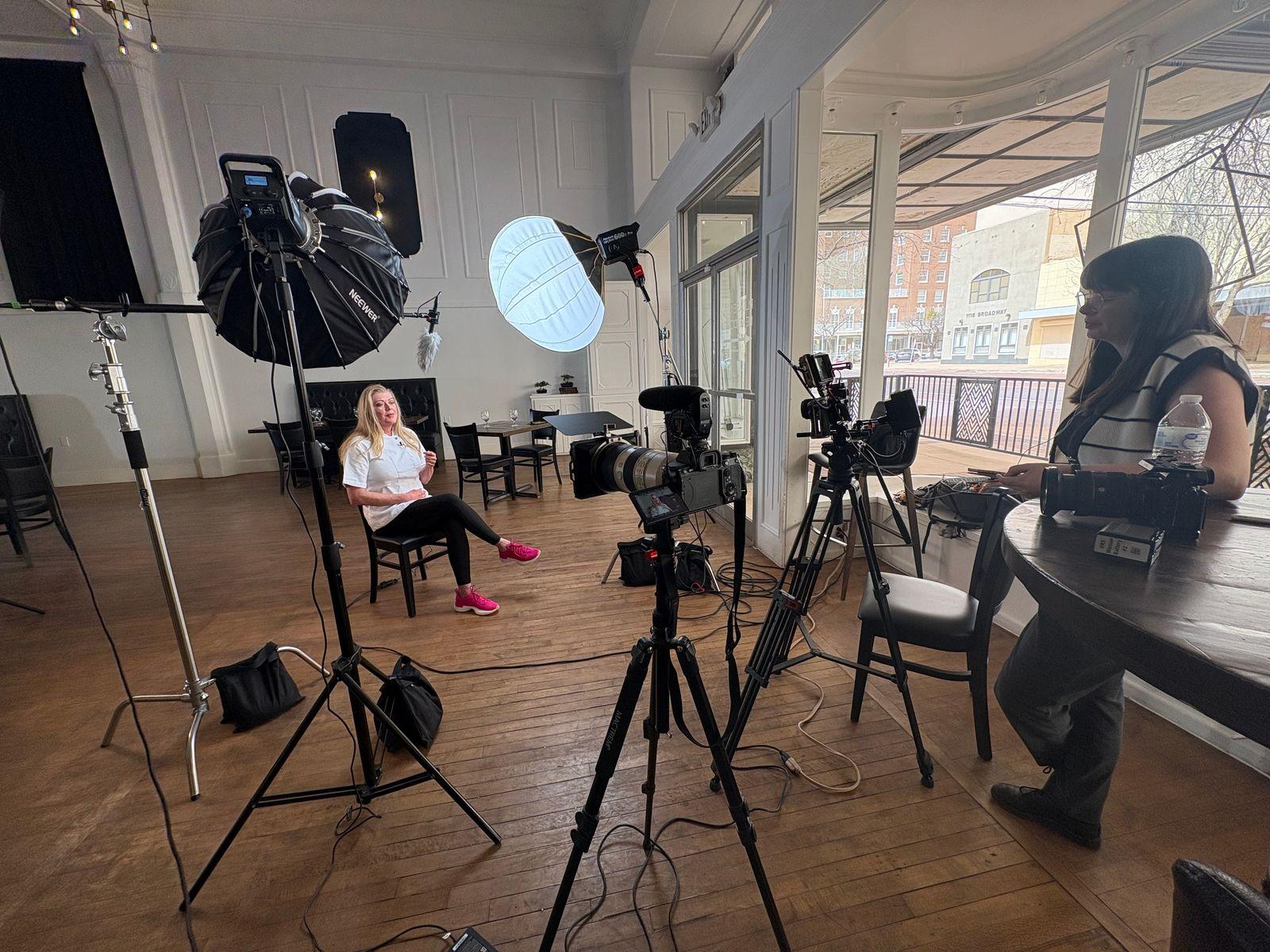
Which is why the useful target is distinct setups, not recorded minutes. Ten setups shot three ways each — wide, medium, tight — cut better than forty minutes of one unbroken wide shot of the same room. The crew filming the same thirty seconds of ordinary work four times from four angles is not being indecisive. That is what building coverage looks like, and it is described in context in our walkthrough of what happens on a video shoot day.
What Makes a Clip Usable Instead of Just Recorded
Four things separate footage an editor can work with from footage that technically exists.
A complete action. A clip of someone picking up a part, inspecting it, and setting it down can be trimmed anywhere. A clip that catches only the middle of that motion can be cut in exactly one place, if at all.
Handles on both ends. The shot has to be held several seconds longer than it feels necessary to hold it, so the editor has material to trim into and out of. Most unusable b-roll is unusable because the camera stopped the instant the action did.
More than one size of the same thing. Cutting between two shots of similar framing reads as a jump rather than an edit. Wide, medium, and tight versions of the same action give the editor somewhere to go.
Nothing in frame that cannot be published. More on that below, because it is the failure that costs the most.
What to Actually Put in Front of the Camera
The inventory that covers most business video:
- Process — the work being done, start to finish, in pieces.
- Hands — the single most reusable category of shot there is. No faces, no wardrobe, no haircut, so it dates slowly.
- Product and materials — close, lit, turning or being handled.
- Space — the exterior, the entrance, a walk through, the room from a corner.
- Interaction — two people in conversation, a handoff, a review over a screen.
- Detail and texture — the shots that have no job except to break up a sequence, and that an editor will thank you for.
- Movement — someone entering, crossing a floor, opening a door. Motion inside the frame reads better than a locked-off still of nothing.
Worth noting that none of this requires anyone to perform. If the on-camera question is still unresolved for your project, who goes on camera covers it — but a department can be filmed thoroughly without filming a single face.
The Five Things That Make B-Roll Unusable
Screens you cannot publish. Client names, patient information, an open inbox, a dashboard with real numbers. Sort out what every visible screen will display before the day, not when the editor flags it.
People who did not agree to appear. Anyone recognizable in the frame needs to have consented, and that is a conversation to have in advance rather than in front of a running camera. The release sits alongside the rest of your usage rights.
Other companies' branding. Logos on equipment, branded packaging on a shelf, a competitor's product in the background of an otherwise perfect shot.
Anything that stamps a date on the footage. Holiday decorations, a seasonal display, a wall calendar, a visible clock, a half-finished renovation. Each one quietly converts a reusable clip into one you can only run for a few months.
Shots with no action in them. An empty desk, a still room, a logo on a wall. They look fine in isolation and do nothing in a sequence.
B-Roll Is the Part of the Shoot That Outlives the Project
The interview belongs to one script and one speaker. Change the message, or lose the person who delivered it, and that footage is finished.
The b-roll library does not work that way. Shots of your space, your work, and your people's hands stay usable across future videos, social cutdowns, website headers, and ads for as long as the space and the work in frame are still current. On most projects it is the single most durable thing the day produces — which is a real argument for filming more of it than the current script strictly needs, while the crew and the lights are already in the building.
That also makes it the obvious thing to ask about on the deliverable list. The default on many projects is that you receive the finished cut and nothing else. Ask instead for the selects — the clips chosen as good, logged and named, not just the handful that made the final edit. Our guide to what happens after the shoot covers what else belongs on that list.
What This Means for Scoping a Project
Two practical consequences when you are reading a quote.
The first is that "interviews plus b-roll" with no further detail is not a scope. The question that matters is how much of the day is allocated to coverage, and how many distinct setups that works out to. A half day that spends three hours on interviews and forty minutes on everything else will produce a thin edit no matter who cuts it.
The second is that b-roll is where the gap between a videographer and a production crew shows up most visibly, because building coverage is a planning exercise before it is a shooting one — somebody has to have worked out in advance what the edit will need. That distinction is the subject of video production vs videography, and the planning side of it belongs in the creative brief.
Frequently Asked Questions
What is b-roll in video production?
B-roll is every shot in a video that is not the primary footage of someone speaking to camera. The work happening, hands on a product, a walk through the space, two people in conversation, a close shot of a tool or a screen. The primary footage — the interview or the presenter — is the A-roll, and the term is inherited from film editing, where the main footage and the supplementary footage physically lived on two different reels. In a modern edit, b-roll is what the picture cuts to while the voice keeps going.
Why is b-roll important?
It does four jobs at once. It hides the cuts — an interview trimmed from twenty minutes to ninety seconds contains dozens of edits, and without something to cut away to, every one of them is a visible jump. It shows the claim instead of leaving the viewer to take someone's word for it. It controls pace, because a talking head held for ninety seconds feels twice as long as the same audio over changing pictures. And it gives the editor room to produce vertical and square versions without reframing a face. A video short on b-roll is not a stylistic choice; it is an edit with no moves available.
How much b-roll does a video need?
Count cuts, not minutes. A ninety-second edit built from a recorded interview typically holds somewhere between twenty and forty picture changes, and each one wants a distinct clip. Reuse the same shot three times and the viewer registers it as padding even if they cannot say why. The practical target is a number of genuinely different setups rather than a quantity of recorded footage: ten distinct setups, each shot wide, medium, and tight, will cut better than forty minutes of one unbroken wide shot of the same room.
What makes a b-roll clip usable?
Four things. A complete action with a beginning and an end, so the clip can be trimmed anywhere rather than only at the one moment something happened. Enough handle on either side — the shot held several seconds longer than it feels necessary to hold it. More than one size of the same action, because cutting between two shots of similar framing produces a jump rather than an edit. And nothing in frame that cannot be published, which in practice means screens, documents, other companies' branding, and anyone who has not agreed to appear.
What is the difference between b-roll and stock footage?
Origin and specificity. B-roll is filmed on your shoot, in your space, with your people and your work, which is what makes it evidence of the claim the video is making. Stock footage is licensed from a library and shows a generic version of the same idea. Stock has legitimate uses — an aerial of a city, an establishing shot you cannot practically film — but it cannot do the job b-roll does, because a viewer who recognizes a shot as stock stops reading the video as a description of your business.
Can b-roll be reused in other videos?
Yes, and it is usually the most reusable thing a shoot produces. The interview is tied to one script and one speaker; the b-roll library is a set of shots of your work that can carry future videos, social cutdowns, website headers, and ads for as long as the space, the people, and the products in frame are still current. This is a good argument for filming more of it than one project strictly requires, and for asking that the full selects be delivered rather than only the clips used in the final cut.
Planning a video and not sure how much of the day should go to coverage? That is one of the first things we work out. Book a free strategy call, or see how we scope video production generally.